Table of Contents
- What is the Role of Phase-Locked Loop (PLL) Synthesizers in Achieving RF Stability?
- How Does a True Diversity Receiver Antenna Configuration Differ from Antenna Diversity?
- What Circuit Topology Minimizes Intermodulation Distortion (IMD) in Multi-Channel Systems?
- How is the Squelch Threshold Engineered to Prevent Audio Dropouts and RF Noise?
- Why is the Compander (Compressor-Expander) Essential for High-Fidelity Signal Processing?
- What are the Specific Benefits of Using the UHF Band Over VHF for Wireless Microphones?
- How Do Engineers Calibrate Audio Frequency Response to Ensure 20Hz–18KHz Fidelity?
- What RF Filter Designs are Used to Achieve >85dB Image Rejection in True Diversity Systems?
- How Does Transmitter RF Output Power (e.g., 10mW) Relate to Range and Battery Efficiency?
- Conclusion: The Sum of Superior Audio Engineering
- Frequently Asked Questions (FAQ)
If you are an AV system integrator, a live sound engineer, or a technical director for corporate events, you already know the sinking feeling of a wireless microphone dropping out mid-sentence. In high-demand environments—from auditoriums and panel discussions to large-scale staging—audio dropouts are simply unacceptable. Solving this problem requires a deep dive into electro-acoustic engineering and Radio Frequency (RF) physics.
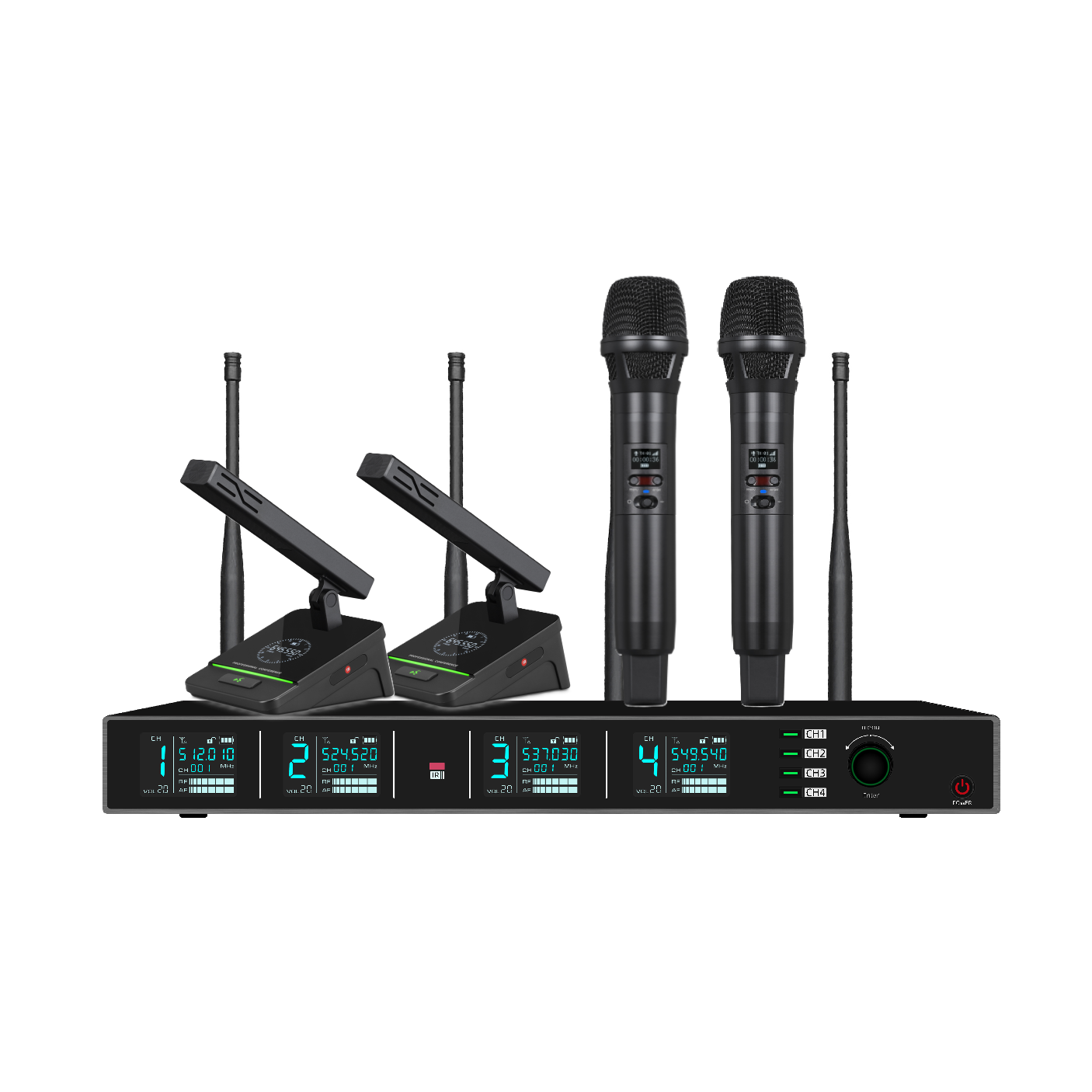
The MKS-9800-X4 is an elite “One-to-Four” True Diversity UHF Wireless Microphone System designed for flawless RF performance.
Today, we are going to break down the exact engineering principles that make uninterrupted wireless audio possible. We will use the MKS-9800-X4 Professional True Diversity Wireless Microphone System (One-to-Four) as our technical benchmark. By supporting four independent microphone channels on a single receiver host, this system dramatically saves rack space while ensuring zero signal dropouts. Let’s look under the hood and answer the most critical questions about true diversity wireless engineering.
What is the Role of Phase-Locked Loop (PLL) Synthesizers in Achieving RF Stability?
In older, fixed-frequency wireless microphones, a quartz crystal oscillator dictated the transmission frequency. If the ambient temperature changed, the crystal’s physical properties fluctuated, causing the radio frequency to drift. This drift resulted in distortion and connection loss. Modern professional systems, like the MKS-9800-X4, eliminate this issue entirely by utilizing Phase-Locked Loop (PLL) synthesizers.
Think of a PLL circuit as a highly precise, self-correcting anchor. A PLL circuit continuously compares the phase of an internal Voltage-Controlled Oscillator (VCO) against a highly stable reference frequency. If the transmitter’s frequency begins to drift due to thermal expansion or battery voltage drop, the phase detector instantly registers the error and applies a corrective voltage to snap the VCO back into perfect alignment. This active feedback loop is what allows the MKS-9800-X4 to offer 100 to 200 selectable channels with absolute, unshakeable RF stability across the 512-562MHz and 564-608MHz bands.
How Does a True Diversity Receiver Antenna Configuration Differ from Antenna Diversity?
The term “diversity” is frequently thrown around in audio marketing, but there is a massive engineering distinction between standard “Antenna Diversity” and True Diversity.
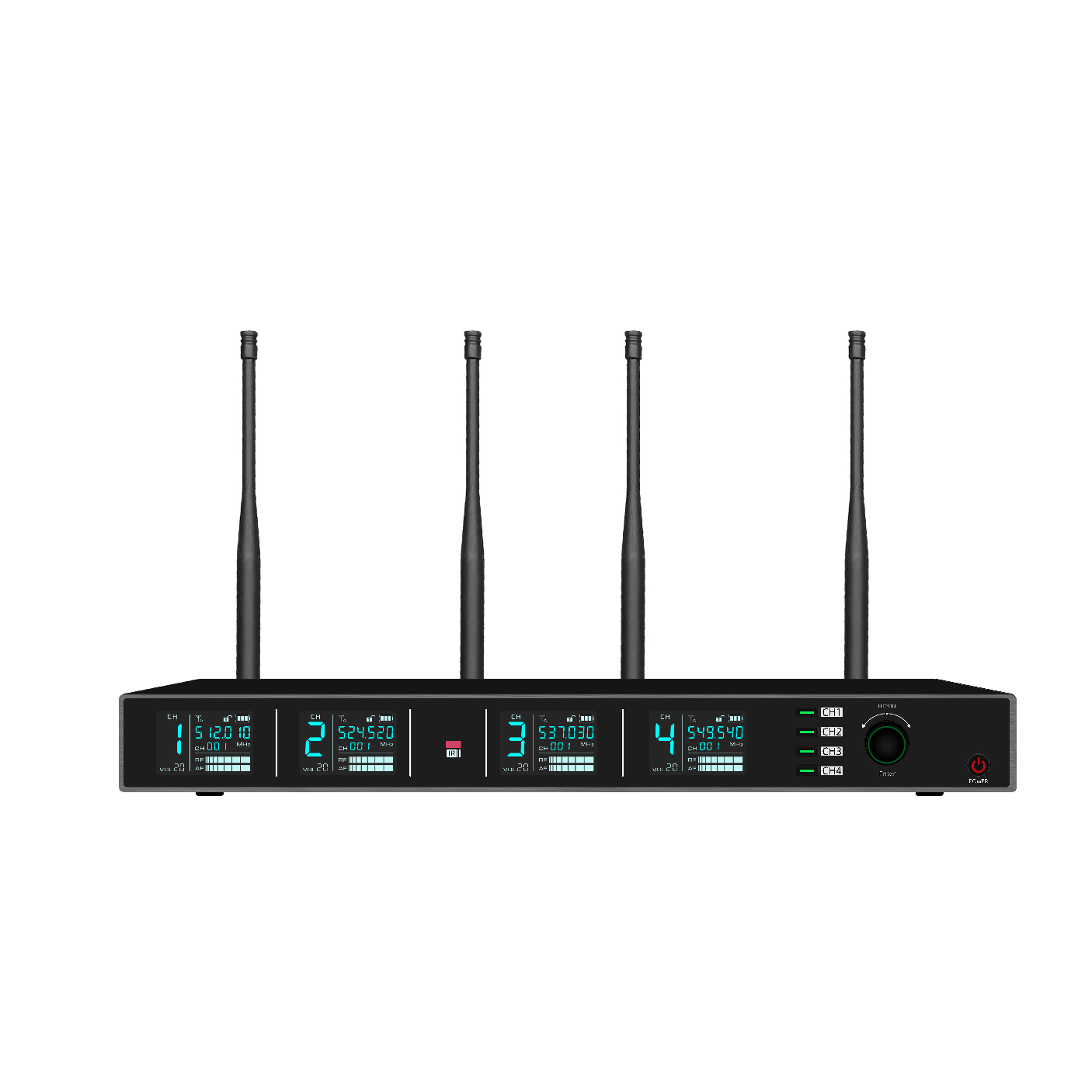
In standard antenna diversity, a single receiver circuit simply switches between two antennas, guessing which one might have a better signal based on overall RF strength. A True Diversity system, however, uses two entirely independent receiver modules (tuners) per microphone channel. The MKS-9800-X4 constantly evaluates the signal-to-noise ratio and audio phase integrity from both distinct receiver circuits simultaneously. A highly sophisticated comparator circuit seamlessly crossfades to the stronger, cleaner signal in microseconds. This dual-circuit topology physically eliminates multipath interference—the phenomenon where radio waves bounce off walls and cancel each other out, causing sudden “dead zones” on a stage.
What Circuit Topology Minimizes Intermodulation Distortion (IMD) in Multi-Channel Systems?
The MKS-9800-X4 is a “One-to-Four” system, meaning four distinct wireless transmitters are blasting RF signals into a single 1U receiver chassis. When multiple radio frequencies operate in close proximity, they interact mathematically, creating “ghost” frequencies known as Intermodulation Distortion (IMD). If these ghost frequencies land on your audio channel, you hear harsh, buzzing interference.
To minimize IMD, our engineers deploy high-linearity RF front-end amplifiers. By utilizing specialized gallium arsenide (GaAs) field-effect transistors, the receiver can handle massive amounts of incoming RF energy without overloading the input stage. Furthermore, the 100-200 selectable channels on the MKS-9800-X4 are pre-calculated using advanced intermodulation software. The system’s firmware actively locks out channel combinations that would mathematically trigger 3rd-order or 5th-order IMD, ensuring clean airspace even when all four channels are active simultaneously in a corporate panel discussion.
How is the Squelch Threshold Engineered to Prevent Audio Dropouts and RF Noise?
If you turn off a wireless transmitter while the receiver is unmuted, the receiver’s automatic gain control will crank up to maximum, hunting for a signal. It will grab ambient RF “white noise” and blast it through your PA system—an event that can destroy tweeters and deafen the audience.
Squelch is the circuit designed to prevent this. It acts as an intelligent noise gate. Standard amplitude squelch simply mutes the audio if the RF signal strength drops below a set threshold. However, the MKS-9800-X4 utilizes a more advanced Pilot Tone (Tone Key) Squelch. The transmitter sends a sub-audible, ultrasonic frequency (often around 32kHz) alongside the audio. The receiver will absolutely refuse to unmute its audio output unless it detects this specific, proprietary pilot tone. This ensures that even if a burst of powerful RF interference hits the receiver, the squelch remains clamped shut, protecting your audio system.
Why is the Compander (Compressor-Expander) Essential for High-Fidelity Signal Processing?
FM radio transmission is inherently noisy and has a limited dynamic range. To achieve the >100dB Dynamic Range and <-96dBm Sensitivity specified on the MKS-9800-X4, we utilize a sophisticated process called companding.
Inside the microphone transmitter, a logarithmic compressor significantly reduces the dynamic range of the singer’s voice, squashing it down so it can ride cleanly over the noisy FM carrier wave without clipping. When this compressed signal reaches the receiver host, an exact inverse expander circuit instantly restores the audio to its original dynamic peaks and valleys. By perfectly matching the attack and release times of the compressor and expander chips, we achieve a whisper-quiet noise floor and explosive transient response, rivaling the fidelity of a hardwired microphone.
What are the Specific Benefits of Using the UHF Band Over VHF for Wireless Microphones?
The MKS-9800-X4 operates squarely in the Ultra-High Frequency (UHF) band. While Very High Frequency (VHF) systems are cheaper to produce, UHF provides massive engineering advantages for professional staging.
Firstly, UHF wavelengths are physically shorter (roughly 12 to 24 inches). Shorter wavelengths penetrate structural obstacles—like stage scaffolding, LED video walls, and human bodies—much more effectively than the long wavelengths of VHF. Secondly, the UHF band offers a vastly wider available spectrum, allowing us to pack 100 to 200 selectable channels into the device without overlapping. Finally, UHF avoids the severe ambient electrical noise generated by lighting ballasts and heavy machinery, which notoriously plagues the lower VHF bands.
How Do Engineers Calibrate Audio Frequency Response to Ensure 20Hz–18KHz Fidelity?
A wireless microphone is a complex chain of analog transducers and digital converters. To achieve the MKS-9800-X4’s exceptionally flat 20Hz – 18KHz (+3db) frequency response, engineers must tune both ends of the transmission path.
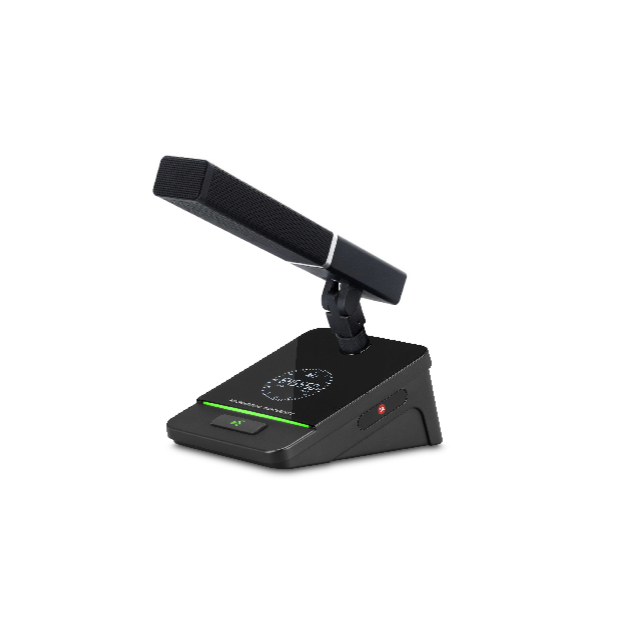
It begins with the acoustic capsule itself. Whether using a dynamic capsule for handheld vocals or a highly sensitive capacitive (condenser) capsule for long gooseneck podium mics, the physical baffling and diaphragm tension are tuned in an anechoic chamber. We then utilize precision capacitors in the audio coupling circuits of the PCB to ensure that the massive wavelengths of sub-bass (20Hz) are not rolled off, while utilizing pre-emphasis and de-emphasis EQ curves within the FM transmission to preserve the high-frequency “air” and articulation (up to 18KHz) without introducing tape-like hiss.
What RF Filter Designs are Used to Achieve >85dB Image Rejection in True Diversity Systems?
In superheterodyne receiver architecture, the incoming RF signal is mixed with a local oscillator to step down the frequency for processing. A mathematical byproduct of this mixing is an “image frequency”—an unwanted phantom signal that mirrors the desired frequency. If a local TV station happens to broadcast on your image frequency, it will blast right through your audio channel.
To prevent this, the MKS-9800-X4 is engineered with a staggering Image Suppression rating of >85db. We achieve this by deploying high-Q Surface Acoustic Wave (SAW) filters at the very first stage of the receiver input. These specialized ceramic filters act like a physical brick wall, aggressively blocking any RF energy that falls outside our precise tunable bandwidth before it ever reaches the mixer circuit.
How Does Transmitter RF Output Power (e.g., 10mW) Relate to Range and Battery Efficiency?
There is a common misconception in the AV industry that “more power is always better.” However, cranking up the transmitter’s RF output power drains batteries rapidly and, more dangerously, drastically increases the severity of intermodulation distortion (IMD) when using multiple microphones on stage.
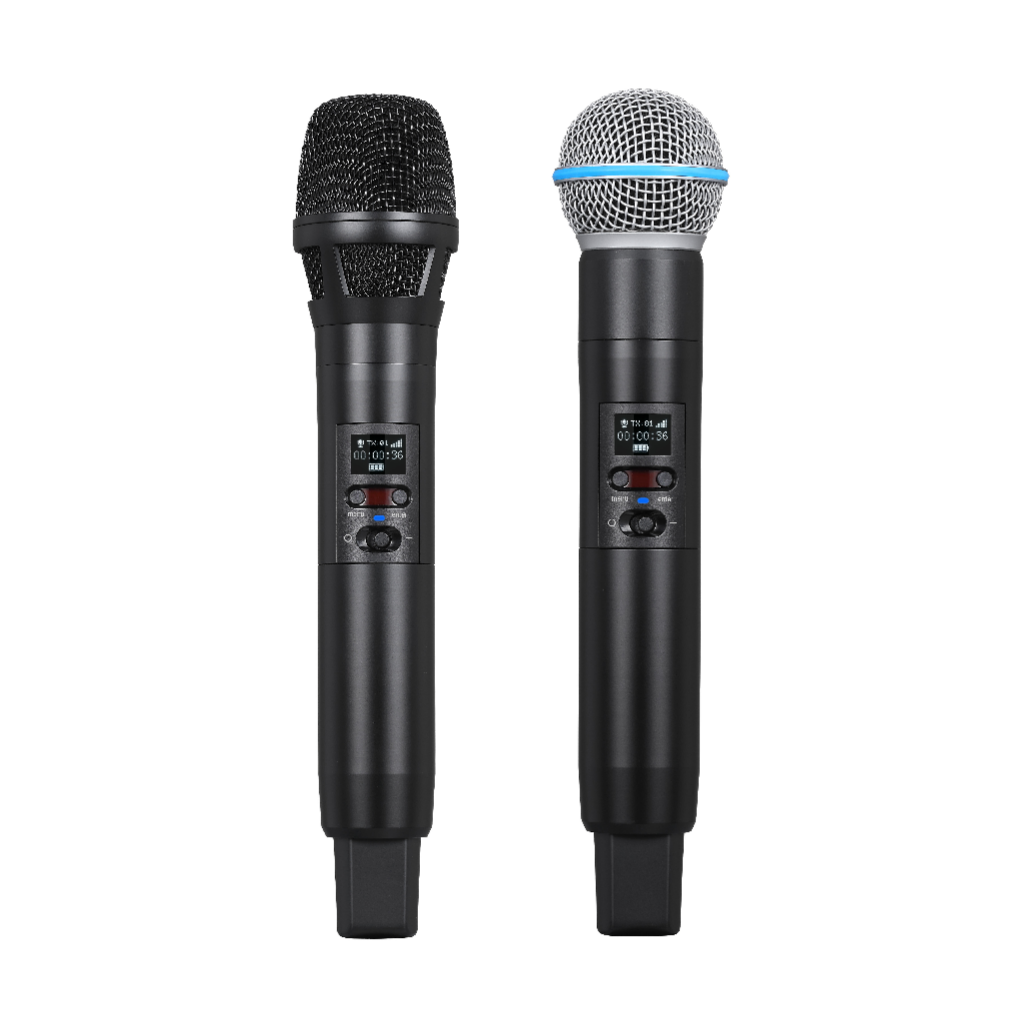
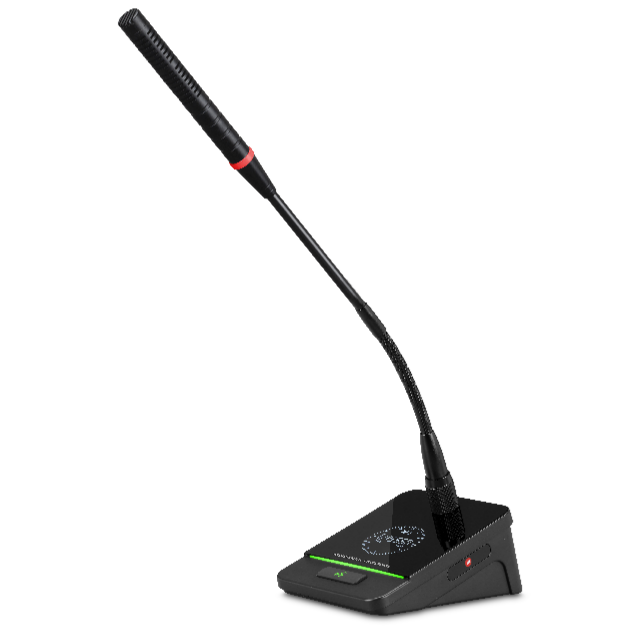
The MKS-9800-X4 transmitters (compatible across handheld, long gooseneck, and square-tube models) are meticulously calibrated to an RF Output Power of 10mW. Through extensive field testing, 10mW has proven to be the absolute optimal sweet spot for professional staging. Combined with the receiver’s high sensitivity (<-96dbm), 10mW provides flawless true diversity coverage across massive auditoriums, while ensuring the transmitters can easily survive an 8-hour corporate conference on a single set of batteries without overheating or creating RF chaos. Furthermore, the Sub Wave Suppression of >60db ensures that the transmitter isn’t wasting battery power broadcasting useless harmonic noise.
Conclusion: The Sum of Superior Audio Engineering
When a keynote speaker steps up to a podium, the last thing they should think about is radio frequency physics. The engineering inside a professional wireless microphone system is designed to be entirely invisible. By integrating True Diversity dual-tuner architecture, advanced PLL frequency synthesis, aggressive SAW filtering for >85dB image rejection, and flawless companding, systems like the MKS-9800-X4 remove the anxiety from live production. It is not just about making a microphone louder; it is about engineering an unshakeable connection between the speaker and their audience.
Frequently Asked Questions (FAQ)
How many microphones can the MKS-9800-X4 support simultaneously?
The MKS-9800-X4 is a “One-to-Four” system, meaning a single 1U receiver host supports four completely independent, true diversity wireless microphone channels simultaneously, saving significant rack space for AV integrators.
Can I mix and match different microphone types with this receiver?
Yes. The MKS-9800-X4 ecosystem is highly versatile. You can synchronize the four receiver channels to any combination of compatible handheld vocal transmitters, long gooseneck podium mics, or square-tube conference transmitters based on your event’s specific needs.
Why does the MKS-9800-X4 use 10mW output power instead of 50mW?
An output power of 10mW is the engineering “sweet spot” for multi-channel systems. It provides more than enough RF strength to cover large auditoriums when paired with our highly sensitive true diversity receivers, while significantly extending battery life and preventing intermodulation distortion (IMD) between nearby transmitters.